
The taboo behind the silos
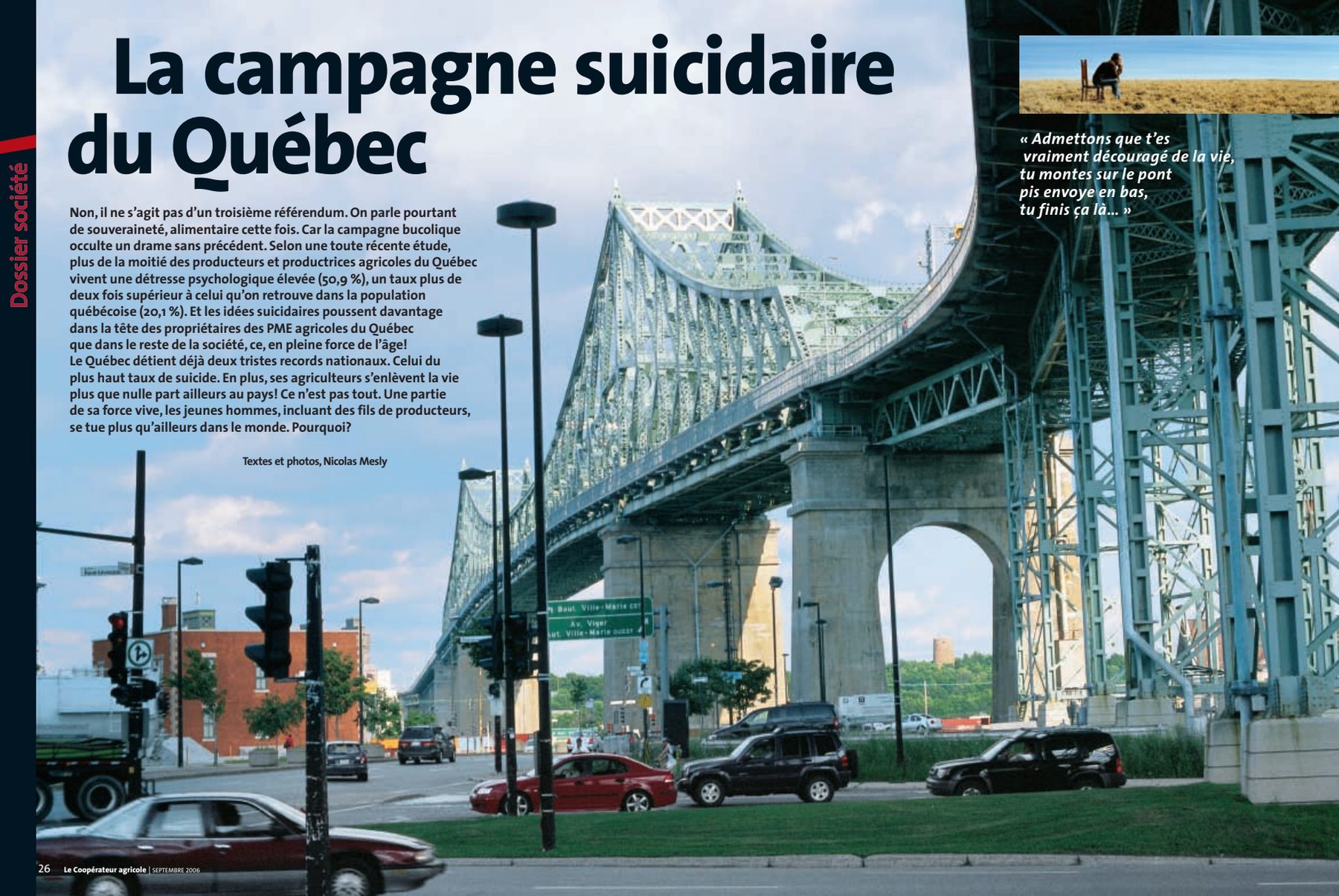
Behind the bucolic image of the countryside is rarely acknowledged distress. A large survey of Quebec producers measured a much higher level of psychological suffering than the general population. Suicidal ideas affect working-age owners of agricultural businesses.
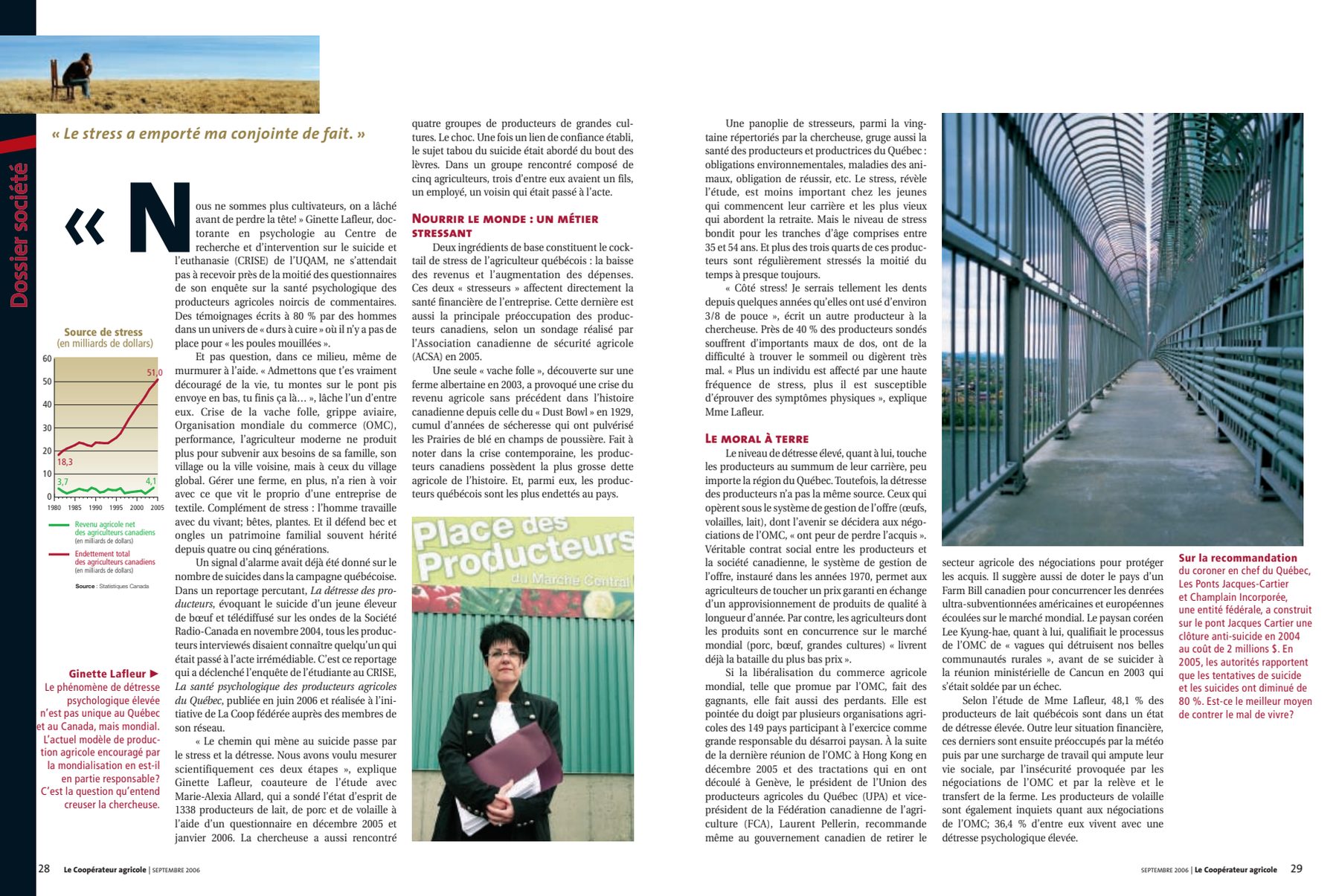
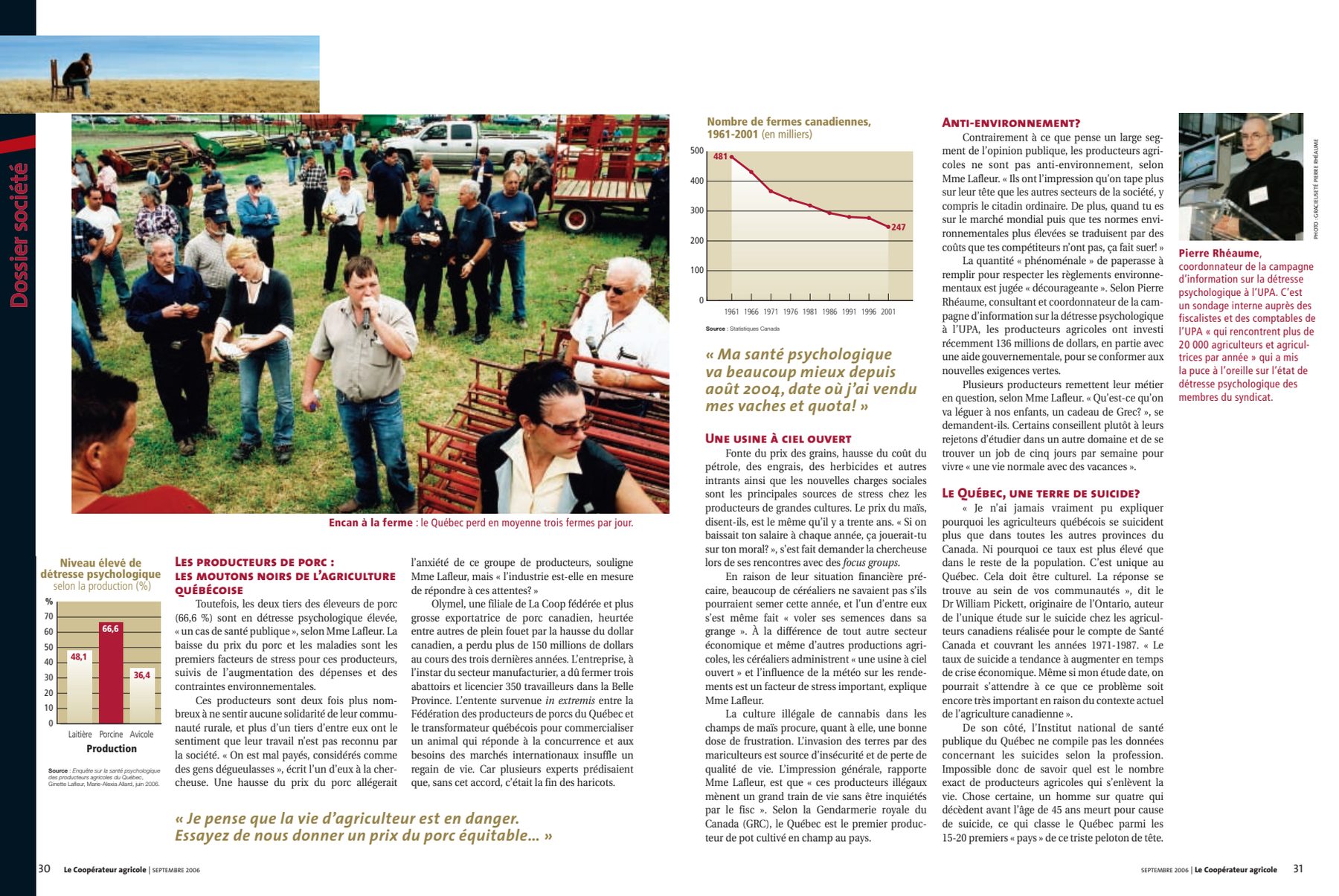
Researcher Ginette Lafleur and her team interviewed more than a thousand dairy, pig and poultry producers. The answers and handwritten comments tell what the statistics do not show alone: insomnia, pain, isolation, feeling of failure and fear of no longer being able to pass the farm on.
A profession under pressure
There are two constant pressures: income decline or instability and increased spending. In addition, health crises, weather, debt, trade negotiations, paperwork, environmental standards, long hours and the responsibility of a family heritage are added.
The work is done with living systems. A disease, drought or world price can erase months of effort. The house is often in the centre of the business: there is no way out of the office nor a clear border between the accounts, the couple, the children and the animals to care for.
The culture of the environment makes the demand for help difficult. Autonomy, endurance and silence have long been valued. It may seem incompatible with the role of business manager, provider and steward of a farm that has been transmitted for several generations.
Saving lives
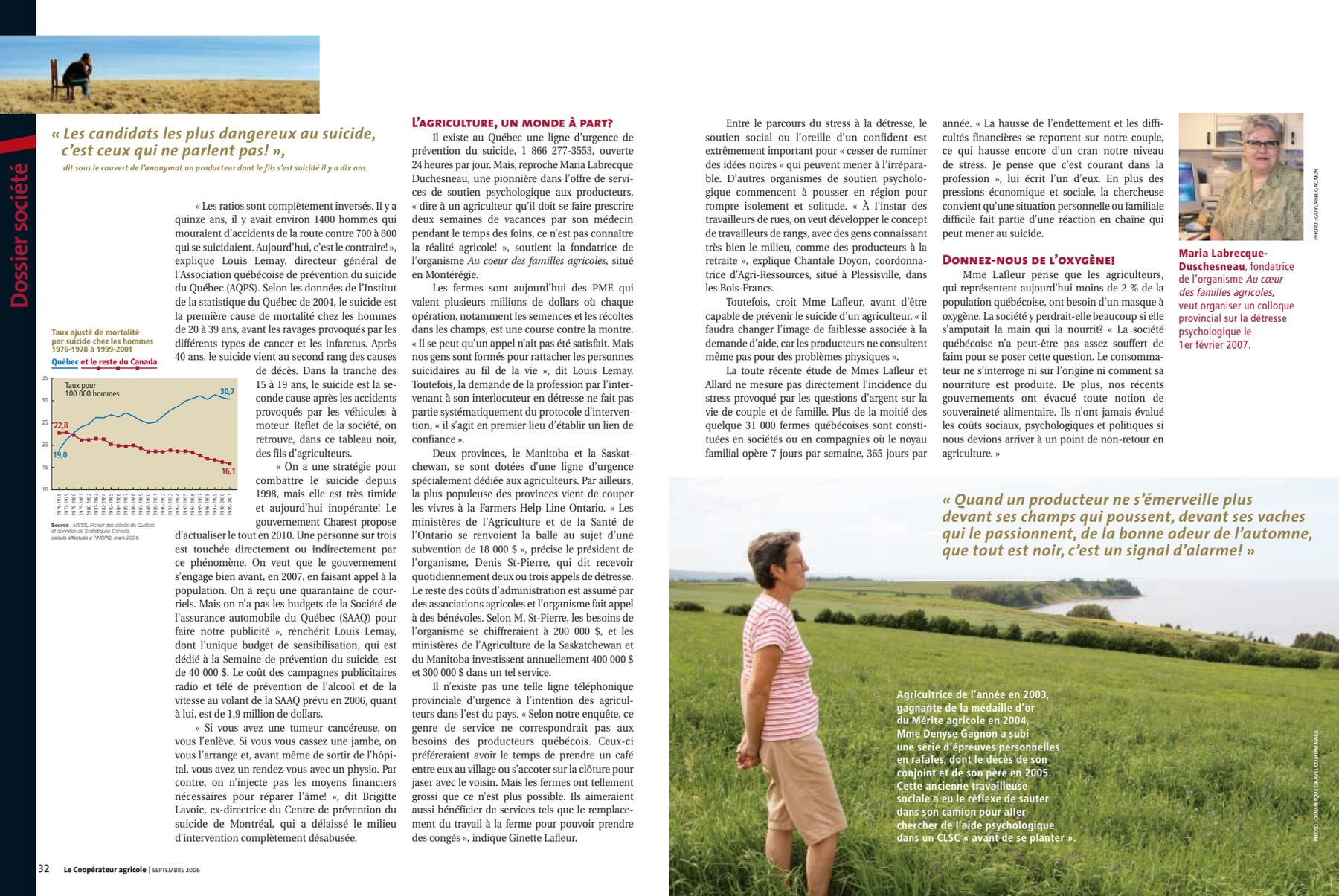
The file gives the floor to bereaved families, producers and stakeholders who learn to recognize early warning signs. It shows that prevention cannot be based solely on the person in crisis: relatives, accountants, veterinarians, advisers and agricultural organisations can open a door.
Sentinel networks and services adapted to the agricultural world bring aid closer to the field. The aim is to intervene before the emergency, with professionals who understand both mental health and the reality of an agricultural enterprise. Confidentiality and trust are essential in small communities.
Talking about suicide requires not to reduce a life to a gesture or a profession to its tragedies. The investigation puts each story in a system of pressure and recalls that a crisis is temporary, even when it seems total. Saving lives begins by making distress visible, credible and shareable.
The original publication
Browse the publication in its original editorial design. The complete PDF is available at the end of the story.
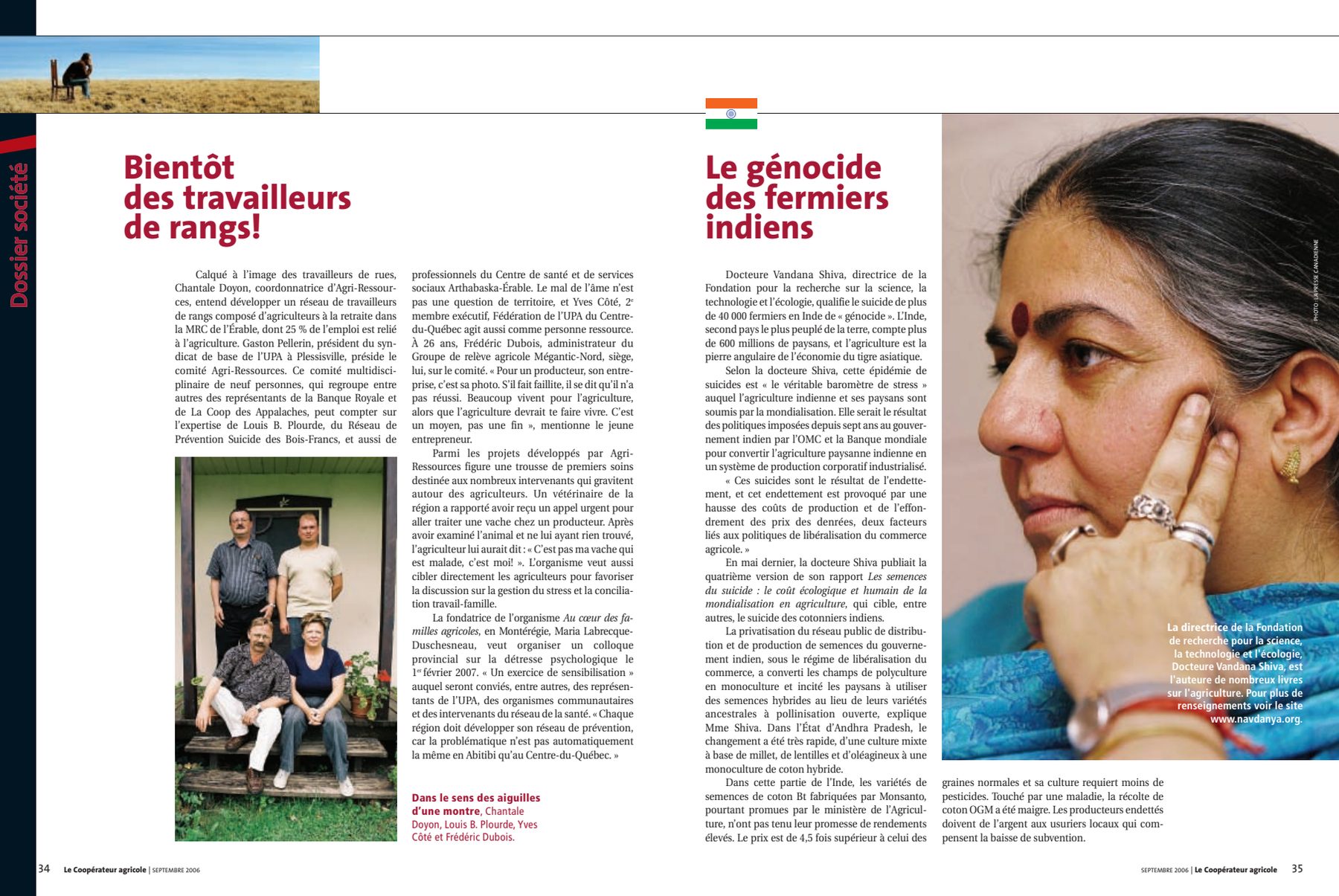

Open the original document
View the story in its original editorial design.
View the original publication ↗