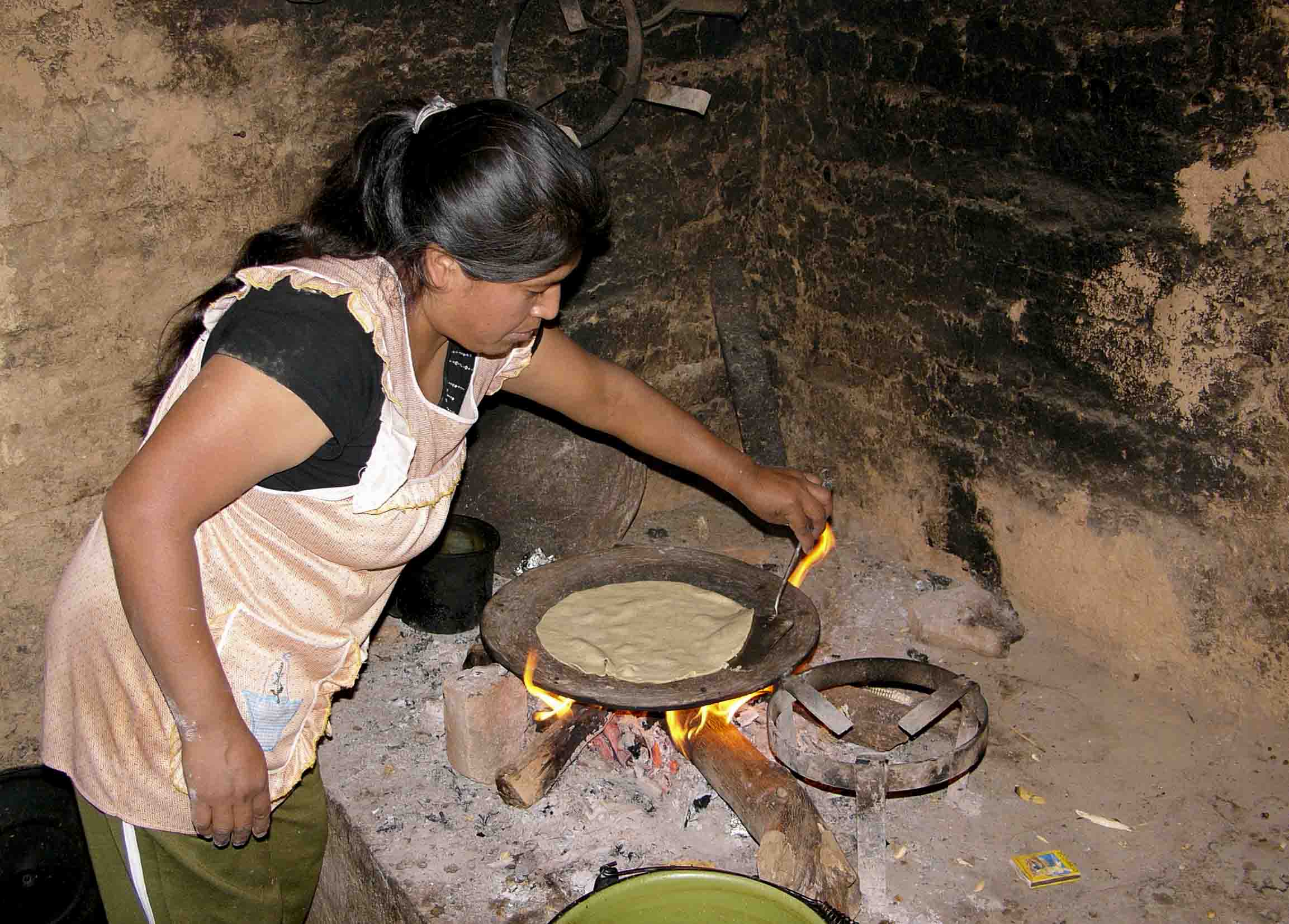
The Corn People
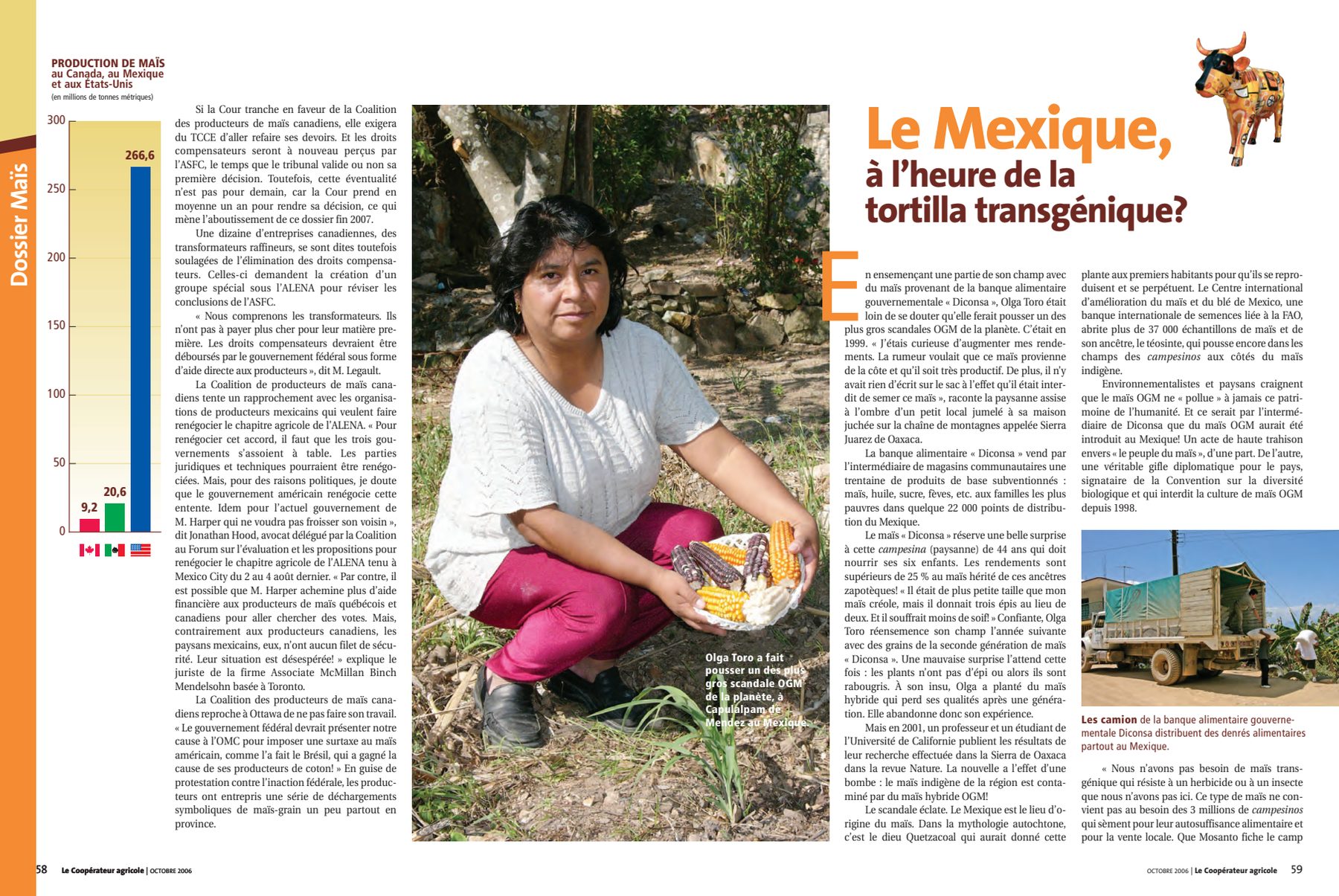
In the Sierra Juárez de Oaxaca, Olga Luna prepares the corn dough on a stone, then cooks the tortillas by wood fire. The gesture is both everyday and ancient. In Zapotec mythology, humanity itself is born of corn after having failed to be born of wood and mud.
Olga and her husband Reynaldo own a hectare to feed their families. In the absence of credit, she can hire neither a team of oxen nor farmhands. Reynaldo went to the United States to look for the money needed for the household and the children's schooling, but he returned without the desired stability.
The exodus under NAFTA
Their history joins that of thousands of campesinos pushed north. Under NAFTA, Mexico opened its market to American maize, produced on a large scale and supported by government aid. Imported grain lowers prices without removing costs on small farms.
The peasants demonstrated in the capital with the cry of "the countryside can no longer". They denounce a free trade that deals with deeply unequal agriculture as if they had the same land, credit and safety net.
The constitutional reform of the 1990s also allowed for the privatization of communal lands and ejidos. The individual title can serve as a bank guarantee, but it also allows the sale of a heritage that protected communities. When the harvest no longer pays, the land becomes the last wealth to yield.
Transgenic tortilla?
The migration movement directly links Oaxaca to Canadian farms. Thousands of Mexican workers come each year to harvest fruits and vegetables north of the 49th parallel. Their work supports a prosperous agriculture, while their own villages lose part of their youth and labour.
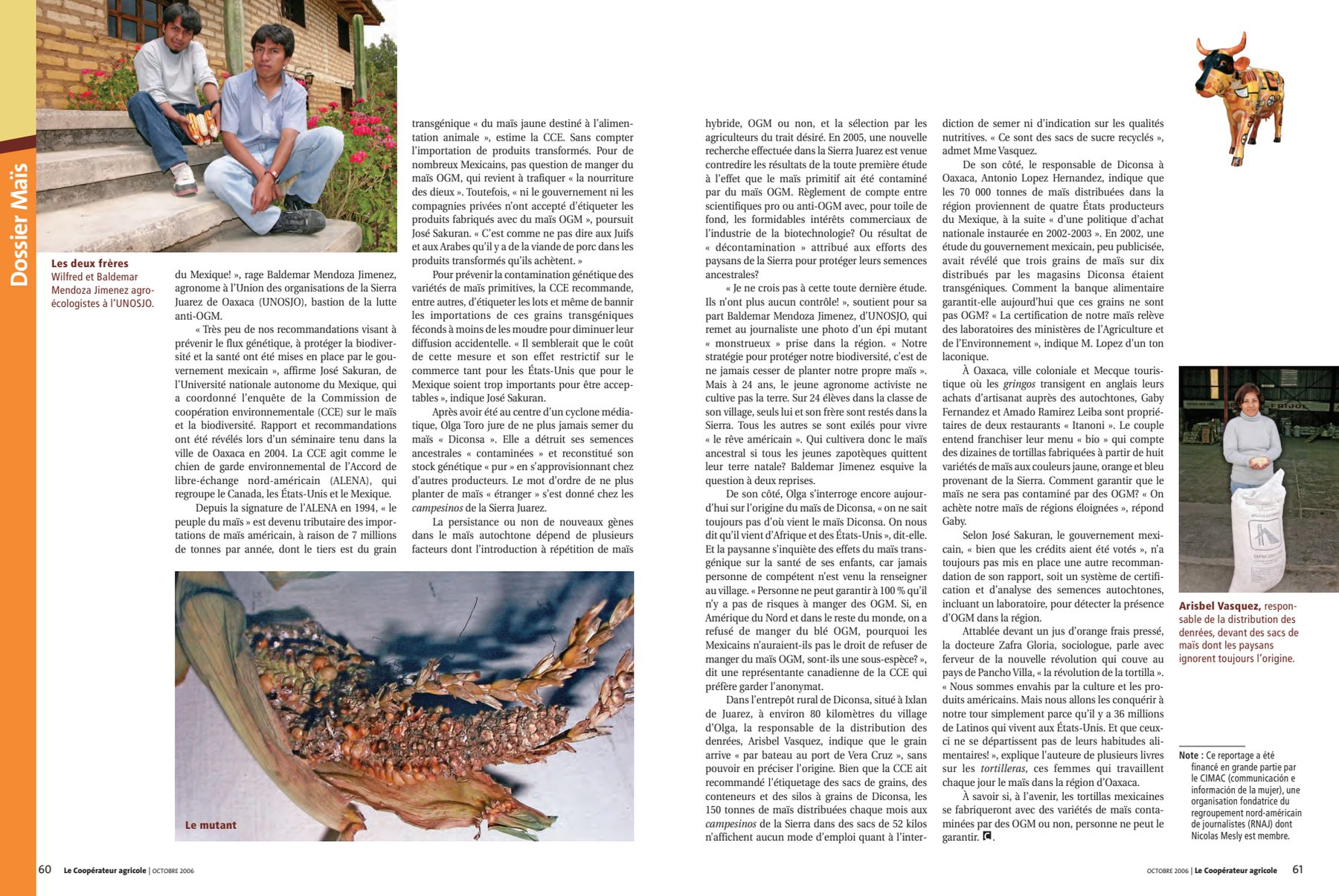
A second conflict crosses the fields: hybrid and transgenic maize in the world cradle of the plant. Grains distributed through the Diconsa food network were sown without clear information. Producers are concerned that the genetic heritage of local varieties may be contaminated or replaced.
Faced with uncertainty, Olga preserves native corn grains, sunset colour. They will have to be sown as long as the family still owns its plot. Tortilla carries the real price of a system: migration, trade, biodiversity and cultural survival combined in a food that is eaten every day.
The original publication
Browse the publication in its original editorial design. The complete PDF is available at the end of the story.
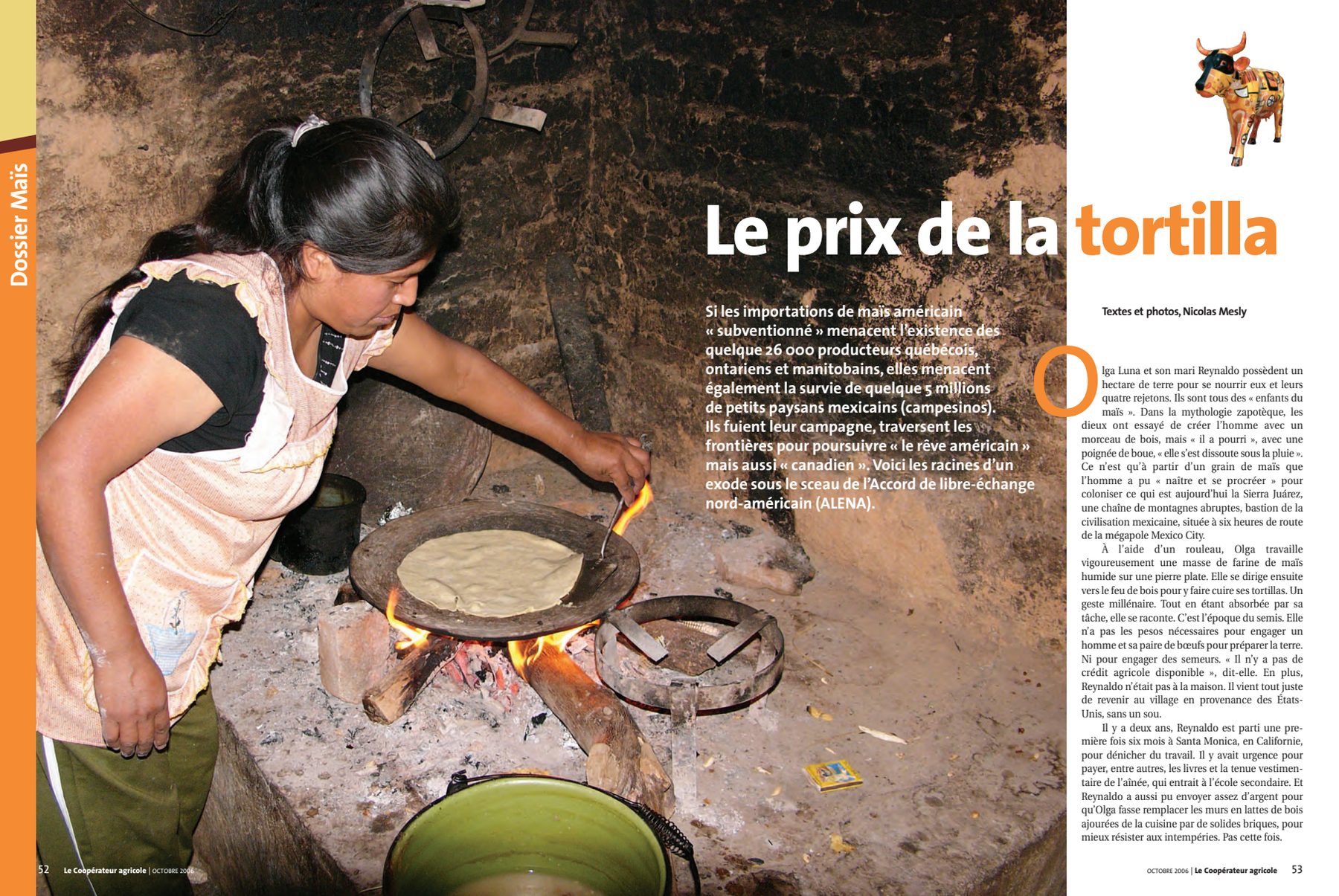
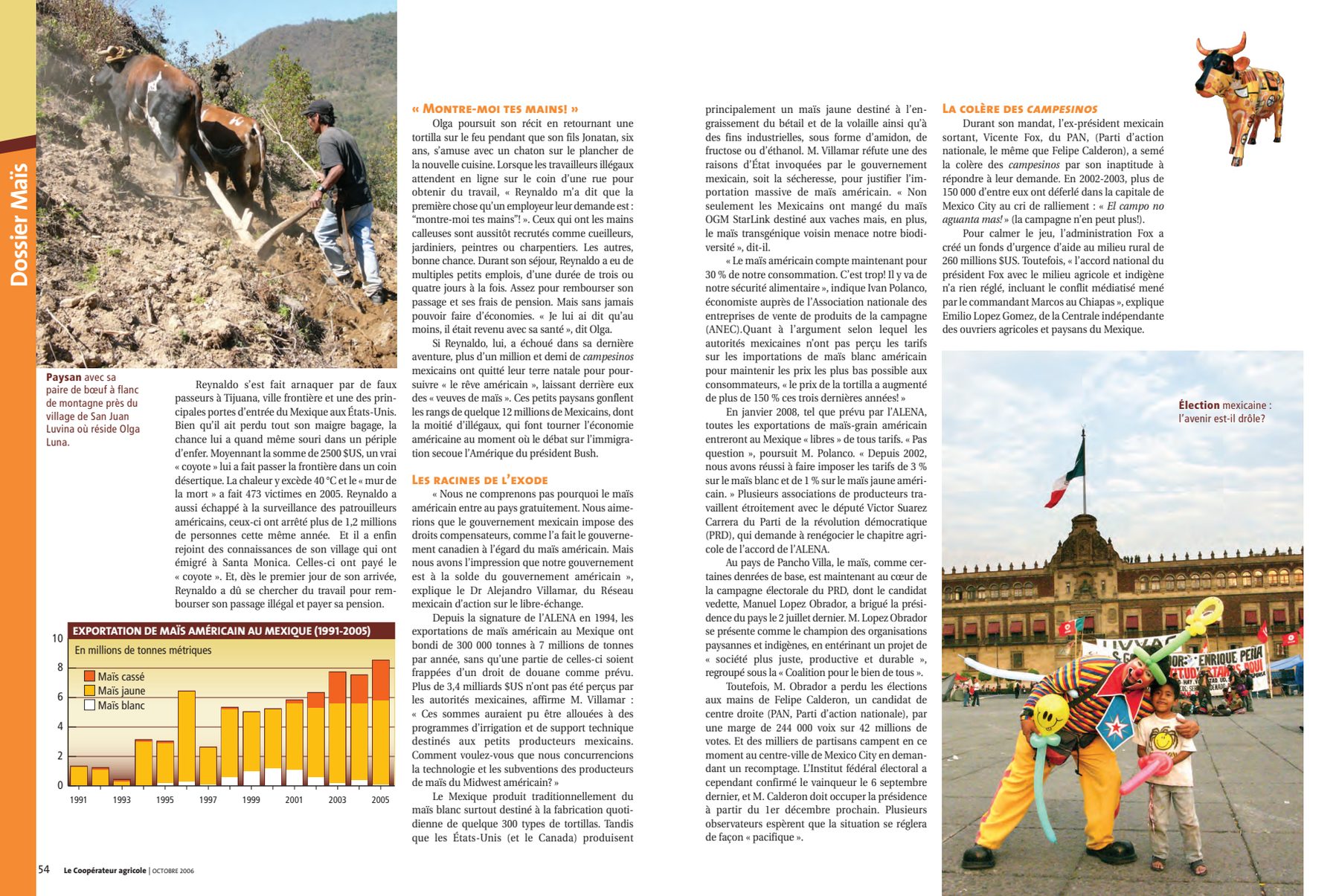
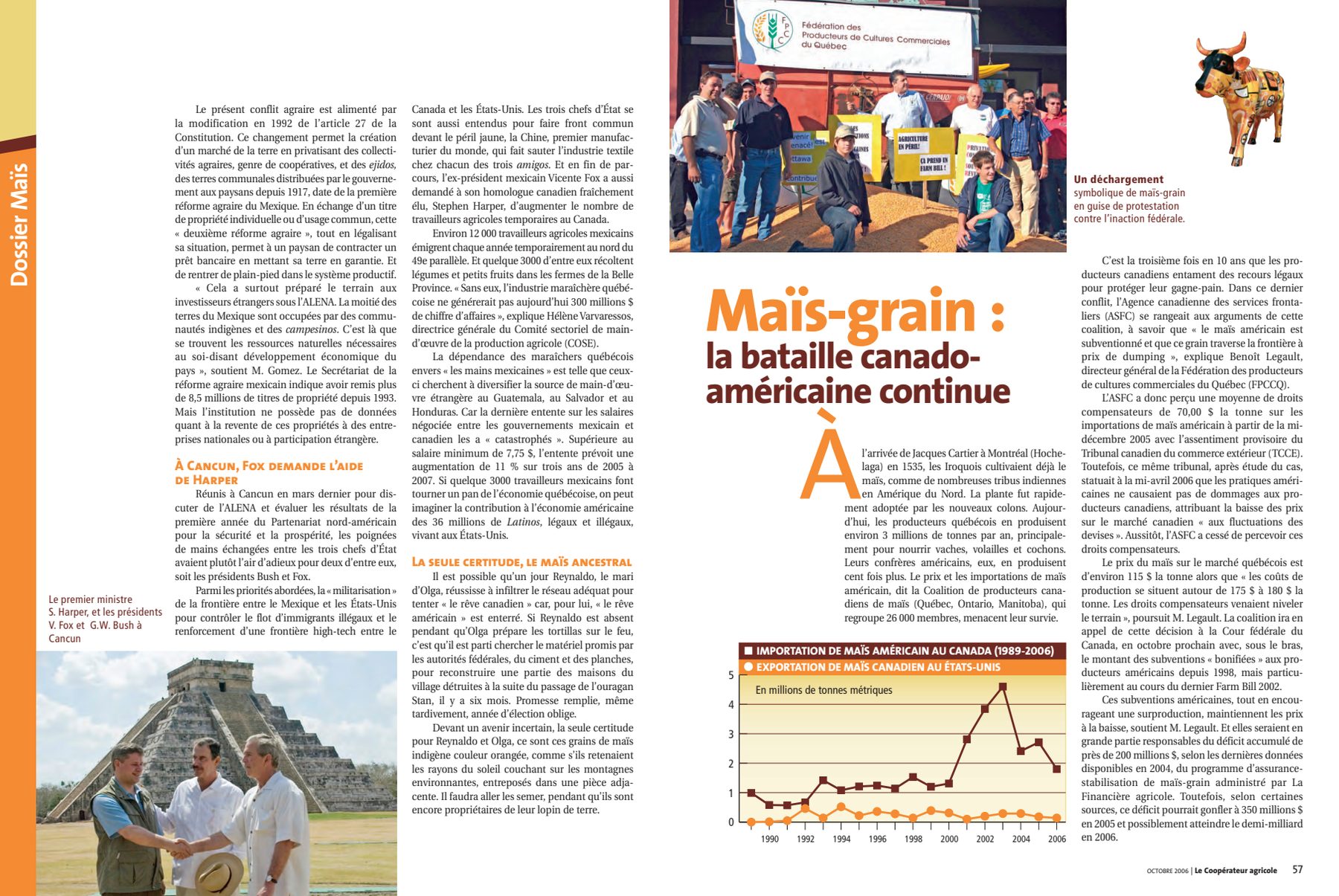
Open the original document
View the story in its original editorial design.
View the original publication ↗