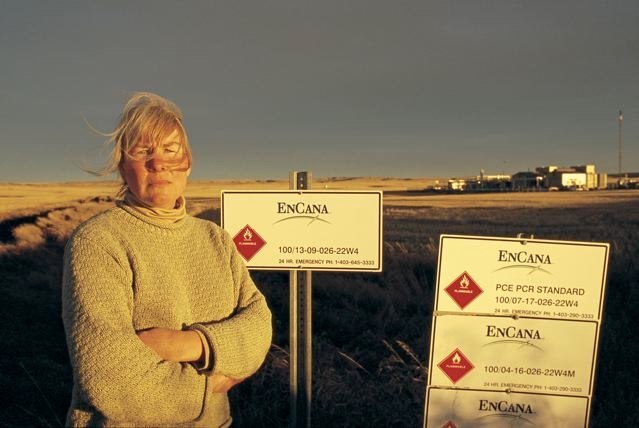
When the water goes on fire
At Dale Zimmerman's, a cow is dying inexplicably. The rancher suspects the water in his wells, where methane reached a spectacular concentration after drilling a nearby natural gas well. Part of the herd must eat snow to drink.
Four times a week, Zimmerman travels tens of miles to bring drinking water to his family. The regulator proposes to rehabilitate his wells. But he asked why the owner should repair at his own expense a resource that worked before the industrialisation of the fields.
Gas prices
In Rosebud, Fiona Lauridsen sees water from the hose and faucets sparkling. A match is enough to ignite. Her neighbour Jessica Ernst, a former consultant with industry, claims that drilling contaminated the aquifer. The companies replied that methane can be naturally present in Alberta geology.
Most producers in the province live with oil or gas facilities. Royalties offer a significant income in agriculture weakened by the mad cow crisis and price volatility. But an annual rent seems derisory when the water of a farm becomes unusable.
The natural gas boom multiplies compressors, roads, pipelines and rural workers. Producers also report weeds transported by vehicles, lost pickets in the fields and fragmentation of agricultural work. Industrialization does not only affect the subsurface: it transforms the surface.
Families facing industry
Proving contamination remains difficult. Analyses must distinguish natural methane from that released by industrial activities, and owners face companies with considerable legal and scientific resources. Even a judicial victory would not automatically make a healthy aquifer.
The provincial economy derives billions of dollars in gas royalties. This prosperity explains part of the balance of power and the feeling of "petro-tyranny" expressed by some residents. Rural families carry a local risk whose benefits flow across the continent.
In a public assembly, a farmer summarizes the issue: one can replace a well, but how can an aquifer be replaced? The question goes beyond individual cases. It asks what evidence, what precaution, and what responsibility one society required before energy was passed under the water of others.
The original publication
Browse the publication in its original editorial design. The complete PDF is available at the end of the story.


Open the original document
View the story in its original editorial design.
View the original publication ↗